
JazzFM Show #7
A romp through 8 bars

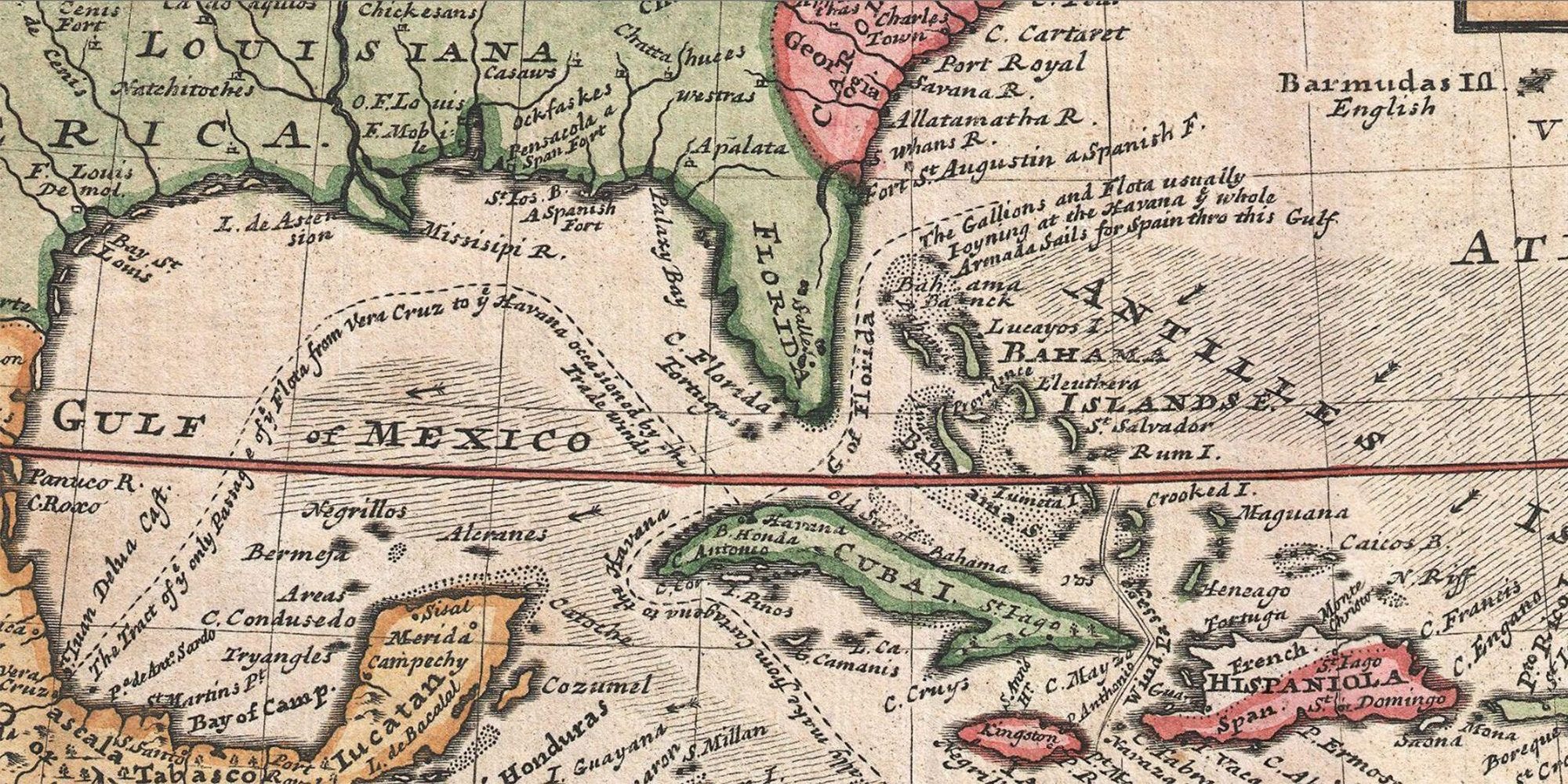
This show deals with a musical form that is prevalent in the music of New Orleans to a greater degree than elsewhere. People, even non-musicians, are familiar with the term 12-bar blues; it’s ubiquitous. People don’t talk so much about the 8-bar blues though, because there’s less of it, and the reason it’s so popular in the rnb folk music of the people of New Orleans is due, in my opinion, to the city’s Caribbean make-up.
I’m not a historian, though I’m fascinated by history, and I don’t consider myself a musicologist, though music is my bread and butter - as well as being my heart and soul. Without false modesty, I’m just someone who plays music, for pleasure and out of necessity because I’m not particularly good at much else, and because it pays the rent, the bills, and gives me the green backs I can exchange for Guinness at Markey’s bar, Oyster Po-Boys at Frady’s Grocery and obscure Jamaican pressings of Rock Steady 45’s from Domino Record Shop on the Bayou Road.
My interest in this music does, however, go beyond the utilitarian. It’s fascinating, and I’m fascinated by it. And, in my opinion, you have to know where it’s come from to see the potential ways it could go in the future. New Orleans, unlike many places in the United States, has a Folkloric tradition. This has evolved as a consequence of historic and geographical events in fairly recent history, with roots that go much further back. This is not the place to go deep into the details; it would take far too long. For those interested, I recommend Ned Sublette’s book ‘The World That Made New Orleans’. Suffice to say, the music is different here because the people who have traditionally made it (and consumed it) are different. This place is nothing like other cities in the deep south, Houston, Miami, Jackson, Atlanta, let alone the cities to the West and North, Los Angeles, Chicago, New York. It is connected to them by virtue of being in the United States, but before Louisiana was bought by the US in the early 1800s, it was a different country and the northernmost city of the Creole world. The ingredients used in the baking of this sub-tropical settlement on the river were the same as those used when they cooked up Cuba and Haiti, just in differing proportions.
Caribbean music is complex, as are all regional musical styles, and cannot be easily reduced, but there are traits that identify it immediately when you’re in the same room as Caribbean musicians playing. You don’t have to be a trained musician to see (or, I should say, hear) the family resemblances.
People here seem to feel the pulse and the dynamic imperatives of 8 bars, generally speaking, more than the 12-bar form more usually associated with the blues of, for example, Texas or Chicago. It’s especially malleable for a culture that demands syncopation, and New Orleans is nothing if not that. Which brings me to the first selection on tonight’s show: Tipitina.
Professor Longhair - “Tipitina”
An early example (and I hope I’m not losing the attention of non-musicians here with technical terms) of taking the triplet feel of a shuffle and straightening it into a 4 feel. When you’re in the realm of 4 beats, quarter notes, the potential for funk expands exponentially. Mac Rebbenack, who you’ll hear mentioned a lot in these musings, suggested it was the proto-funk record. A visiting drummer from Havana, with whom I ate Gumbo yesterday, expressed his joy at hearing many of the same percussive accents here as exist in his hometown. He was referring to what local musicians call the ‘Big Four’, and this recording of Tiptina with Earl Palmer is a good example. The non-musicians amongst you reading this can hear it if you count along with a simple 1,2,3,4 and then, counting at the same speed, insert an ‘and’ between each count: 1 and, 2 and, 3 and, 4 ‘and’. You’ll hear an accent on the snare drum on beat ‘4 and’. There’s the clue. A trained ear will start to spot that accent all over the music of New Orleans, and that’s the first step in understanding how the rhythms here are felt; how that little skip is a genetic strand of the inherited DNA of New Orleanians the provenance of which, like that of their cousins in the islands further south, goes back many hundreds of years.
It’s hard to write about the music itself. The very value of music is that it exists in a realm that lies beyond the limitations of articulated language. Descriptions of the components of its engine leave non-musicans in the dark, and so I won’t try here. Besides, it doesn’t matter. You don’t need to know the function of a fuel pump to enjoy a drive in the country; you don’t require an understanding of the Chef’s technique in the Kitchen to enjoy a tasty meal. Likewise, an understanding of the nuts and bolts of music is not a prerequisite for having the simple feeling that you want to get up and dance when good musicians are digging a groove. All that’s required of the end-user is that you feel it. For somebody like me, though, I’m not satisfied until I’ve got my hands dirty undoing those nuts and bolts and taking the engine of New Orleans music apart and reassembling the bits. For me, personally, that journey started with this song. Tipitina is a great vehicle for not only playing the piano as a funky percussion instrument, it’s more than that, and this is the point: the 8-bar form of the blues also allows for more sophisticated application of the laws of harmonic substitution - and that’s music to the ears of a sophisticated music culture like the one that exists here in the city of New Orleans.
Percy Mayfield - “Please Send Me Someone to Love”
Here you go, a blues that follows the 8-bar form and is so rich in its harmonic composition. This song is far more sophisticated than the three chords found in the toolbox of the more usual guitar-based blues you might hear elsewhere. The examples I’ve selected for this show demonstrate, I hope, that the 8-bar form is not limited, generally speaking, to one chord progression. There is enormous variety. Compare this song to Sweet Emma’s tune or the Shirley and Lee selection, contrast them with the texture and style of the Herlin Riley version of ‘Tootie Ma’, and you’ll hear songs that ostensibly don’t seem to have any connection at all. But the moment you start counting the bars, 1 through 8 and then back to the beginning again, you’ll see the range of musical expression that exists within the ‘feel’ of 8 bars.
Baby Dodds Trio with Danny Barker - “Chocko Me Feendo Hey”
There was a time when the words that Danny Barker sings here meant something; people in Creole New Orleans would have understood, well, presumably they would have - no one knows any more. It’s an example of a phonetic tradition passed down that has survived under the aegis of the annual Carnival, the party that the city throws for itself every year. The words are repeated every year in chanted call-and-response sessions that happen in barrooms on the Sundays leading up to the big day.
The Mardi Gras Indians are familiar now, hundreds of videos and photos pop up on the internet, and the Indians have been folded into other aspects of the local culture that delight and dazzle tourists to the city. It wasn’t that long ago, though, that the Indians did their thing below the radar, and when I got to town in the early ‘80s, there were many New Orleanians who had lived here all their lives and never heard of Mardi Gras Indians, despite the tradition at that time being nearly a hundred years old.
The ‘Iko Iko’, ‘Jock-a-Mo’ lyrical motif has cropped up in so many popular songs. This version by Baby Dodds, an early pioneer of New Orleans Jazz drumming who played with Louis Armstrong, is pretty obscure, but the arrangement Wardell Quezegue did for the Dixie Cups in the ‘60s was a success that spawned many imitations. Sugarboy Crawford had a local hit with it for Chess Records (with a young Snooks Eaglin on guitar). Dr John used it, as did the Neville Brothers. It was a staple in the Grateful Dead repertoire, and Cyndi Lauper covered it. There were even two versions of the song by British artists that were in the UK charts in 1982.
People speculate as to the meaning of the words, but it’s just supposition. Unfortunately, nobody left us with a concise Anglo/Early Nineteenth-century, New Orleans Creole-Patois Dictionary. An English/Irish/Greek New Orleanian who lived here from 1887 to 1888 and was sufficiently fascinated to compile a phrase book with English translations, but neither ‘Jockamo’, nor ‘Two way Pocky way’ (once spelt ‘Tu’vais bas qu’ivais’), nor ‘Iko Iko’ is in it. His curiosity took him down to the French-speaking islands of Haiti, Martinique, and Guadeloupe, where he wrote down Creole proverbs and Idioms of the Afro /FrenchPatois spoken there and collated them in a book he later published called ‘Gombo Z’herbes’. As you might expect, there were many similarities, but the Patois was not the same as that spoken in New Orleans.
Papa Celestin - “Eh! La Bas”
Here’s a song that features an example of an old Creole expression, ‘Eh La Bas’, that you can still hear people use occasionally, an exclamation that’s survived phonetically in conversation even if its literal meaning has been forgotten. This version is a recording by Papa Celestin made at a time when there were still French Creole speakers, though you’d be hard-pressed to find anyone who can understand it these days. Once again, the 8-bar form provides the frame for this jolly romp. It’s fair to say that the song itself long pre-dates the first recording of it, nearly ninety years ago.
Papa Celstin was the number 1 band to hire for your party, Freshman Ball or student bash back in the 40’s. His band provided the soundtrack to adolescence, black and white in the New Orleans of the 40s and this, along with ‘Marie Laveau’, was one of his hit tunes.
There are many more examples of the 8 bar blues; too many to include within the limitations of a one-hour radio show. So, at a later date, on a show further down the road, I’ll revisit the wonderful, whacky world of the 8-bar blues and hopefully you’ll be able to squeeze as much juice and joy out of it as I have over the years.